Tag Archives: Hindu Festival

Ganesh Chaturthi, Birthday of Lord Ganesha – The God Wisdom and Prosperity

Ganesh Chaturthi is celebrated on the birthday of God Ganesha, the god of wisdom and prosperity on the fourth day of the moons bright fortnight, or period from new moon in the lunar month of Bhadrapada. The celebration of Ganesh Chaturthi continue for five, seven, or ten days. Some even stretch it to twenty one days, but ten the most popularly celebrated. In the tradition of the right hand path the first day is the most important. In the left hand path tradition the final day is most important.

Lord Ganesha Statues for Worship

Lord Ganesha Wearing Pagdi (Turban) Shree Ganesh Chaturthi Woship

Ganesha is the god of wisdom and prosperity and is invoked before the beginning of any auspicious work by the Hindus. It is believed that for the fulfillment of one’s desires, his blessing is absolutely necessary. According to the mythology, he is the son of Shiva and Parvati, brother of Kartikeya – the general of the gods, Lakshmi – the goddess of wealth and Saraswati-the goddess of learning. There are numerous stories in Hindu mythology, associated with the birth of this elephant-headed god, whose vehicle is the Mooshak or rat and who loves Modaks.

Lord Ganesha is worshiped with various names & forms as here mentioned in a Marathi prayer given below:-

Gananayaka Ganadaivataya Ganadaksha Yadhimahi
Guna shariraya Guna Manditaya Guneshanay Dhimahi
Gunaditaya Gunadhishaya Guna pravishtaya Dhimahai
Ekadantaya Vakratundaya Gauri tanahaya yadhi mahi
Gajeshanaya Bhalchandraya shree ganeshaya dhimahi
{Ekadantaya Vakratundaya Gauri tanahaya yadhi mahi
Gajeshanaya Bhalchandraya shree ganeshaya
dhimahi

Gaanachaturaya ganaapranaya gaanantaratmane gaanot
sukhay
Gaanamattaya gannott sukha mana se
Guru pujitaya, Guru daivataya, Guru kulasthaine
Guru Vikramaya, Guiyya pravaraya Gurave guna gura ve
Gurudaitya kalakchetre, Guru dharma sada rakdhyaya
Guru putra paritratre Guru pakhand khand khaya
Geet saraya, Geet tatvaya Geet kotraya dhimahi
Gudha gulfaya, Gandha Mattaya Gojaya pradaya dhimahi
Gunaditaya Gunadhishaya Guna pravishtaya Dhimahai
Ekadantaya Vakratundaya Gauri tanahaya yadhi mahi
Gajeshanaya Bhalchandraya shree ganeshaya dhimahi
{Ekadantaya Vakratundaya Gauri tanahaya yadhi mahi
Gajeshanaya Bhalchandraya shree ganeshaya
dhimahi ………………………….

Posted in Ganesha, Hindu God, Hinduism | Tagged , , , , , , , , | 1 Comment

Janmashtmi – Krishna Janmashtami, Janmashtmi 2010

LORD KRISHNA, The Eighth Avatar of Lord Vishnu was born in the Duapar Yug which came just before Kal Yug (the yug in which we find ourselves today’s). His birthday falls on the Ashtami of Krishna Paksh or the 8th day of the dark fortnight in the month of Bhadon (eight days after Raksha Bandhan), some time in July or August, according to the English calendar. This is during the rainy season and is known as  Janam Ashtami.

Jai Shri Krishna

Jai Shree Krishna

This festival is celebrated on two days, once on the actual day of his birth in prison at Mathura, and then on the very next day on his being discovered in the house of Nand and Yashoda at Gokul.

According to Hindu mythology, Naradmuni, had told Hans, the cruel king of Mathura and maternal uncle of Krishna, that he would be killed by the eighth child of his favourite cousin Sister Deviki, who had just got married to Vasudev. Kans vowed to kill the eighth child as soon as it was born, but Narad wanted the godchild to come soon. it is said that a nursing mother does not conceive, and if Deviki nursed each child for a number of months, the eighth one would take long to come. Narad took a lotus with eight petals and began counting from one of the petals, one by one to the last, and then counted from the next petal and ended at the one that he had taken as number one previously, thereby telling Kans that in certain situations, one does not know which one is the first and which one is the last. Consequently, Kans was full of anger and decided to kill all the children born to Denki. He locked up Vasudev and Deviki in the palace prison.

So it came about that Devaki gave birth to a child every year, and Kans came to the prison and killed each one. This happened seven times, but when the eighth was born, a miracle happenecl. All the guards went to sleep, the floors of the prison flew open, and the shackles of Vasudev and Deviki burst open. The child was a beautiful boy beyond compare, and very dark in complexion. There was a voice from the sky (akashvani): ‘Take this child O Vasudev, to your friend’s house at Gokul – Nand and Yashoda. They have had a little girl just born to them, bring her here in place of this little boy, they will not know about the exchange. Go now, or else Kans will destroy this one, born to get rid of evil from this world.’

Laddo Gopal

Krishna Eating Butter - Laddo Gopal

Gokul where Nand and Yashoda lived, was across the river Yamuna, which flowed near the city of Mathura. Vasudev found a chhaaj (freed contraption by which ah foreign matter is removed from any lentil, rice, wheat, etc) in which he put little Krishna and took him to the banks of the great river Yamuna. It being the rainy season, the river was in full spate, and it was still raining. On stepping into the river, poor Vasudev tried to save the baby from the rising river by holding him higher and higher. He was getting very frightened and anxious, but then he remembered the akashvani, which is the voice of angels, and he was reassured. Ike Krishna knew of the dilemma facing his father, and quietly put one foot out and touched the water, and behold, the water after touching the foot of the Lord, started to sub ire and soon the river split up making a dry path for Vasudev to walk upon.

At Gokul, Vasudev entered the house of his friend Nand, who was asleep and so was his wife Yashoda, and so were all the attendants. He saw a sweet baby near Yashoda and quickly exchanged the babies and carried away the little girl. Back at Mathura, he placed her beside his wife. Soon the shackles were back in place, the doors shut and the guards woke up. The attendants on seeing the baby, rushed up to their master Kans, to give him the news. Kans came in a great hurry, because it was the eighth child. He picked up the baby and threw it against the wall, but the little girl flew up into the sky, and a voice was heard: ‘O Kans, your destroyer has already been born, and is elsewhere’, and, along with laughter, the child suddenly turned into lightning and an shed. This little girl has come to be worshipped as Deviji ever since, taking various names like Durga, Tara, Ishani and Mandakini.

Janam Ashtami is celebrated with great pomp and show in temples and homes. Krishna is the one who has given us the life-enduring message of the great Bhagavad Gita.

Incidents of his childhood are depicted through cribs and other decorations made in homes and temples. Such items display his childhood antics and sober moments, and can be arranged with dolls dressed up as kids, men and women, with lehangas, chunnis, dhotis and kurtas. The flute of Krishna can be made out of reed. Radha, his childhood sweetheart, or the Gopis going for water to the river or carrying butter and milk in small earthen pots one on top of another, can be depicted. Raas leelas of every type are arranged. Vishnu and Shiv (with the river Ganga flowing from his head) also present an attractive feature. The layout looks very nice with freshly mowed green grass spread out, and pathways created in the midst, with red gravel. It is great fun planning and executing the decoration, as the whole family is occupied for the entire day. Little children get very much involved in cutting the grass, bringing the mud gravel, leaves and plants, and watch, bright-eyed, as elders dress up the dolls with sari, gold and other shining material. It is best to decorate the crib in a room where it can be displayed for a few days, as people can admire the effort and the beauty.

Posted in Hindu God, Hinduism, Krishna | Tagged , , , , , | Leave a comment

Hindu Festival – Festivals of India

People in India celebrate different variety of festivals. All these festivals are as important as others. The religion of Hinduism has many festivals, including Janmashtmi, Maha Shivaratri, Diwali, NAVARATRI.

JANMASHTAMI

The birth anniversary of Lord Krishna, another incarnation of Vishnu, on the eighth day of the waning moon in Bhadra. Krishna was born in the dead of a stormy night while His parents were interned by the cruel king of the land. He wanted to kill the new-born babe, for he had reasons to believe that the child would cause him harm. Around the time the child was born, all the guards went into a deep sleep, the fetters and the doorlocks fell off by a spell of magic, and the father rescued the baby, bearing Him to a safe place across the river. A serpent covered the child with its hood, as if with an umbrella. The story of Krishna, who stands for justice and love, is contained in the Mahabharata, as well as in the Bhagavatam. It is customary to recite the story of His birth and also His playful boyhood on the occasion. People feel the presence of Krishna -the divine boy in their own children.

Dancing Lord Krishna

Jai Shree Krishna

Maha Shivaratri

Mahashivaratri is the festival celebrating Lord Shiva. Maha Shivaratri is the great nigt of Shiva, This Festival is the most important for the millions of devotees of Lord Shiva.

Rama Navami

Rama Navami is the festival celebration of the birth of Rama.

Hanuman Jayanti

Hanuman Jayanti is the festival celebration of the birth of Hanuman; Rama’s loyal devotee.

GANESHA CHATURTHI

On the fourth day of the waxing moon in the month of Bhadra, a special worship is performed in honour of Lord Ganesh or Ganapati. This is a huge festival in the central and southern parts of India.

NAVARATRI

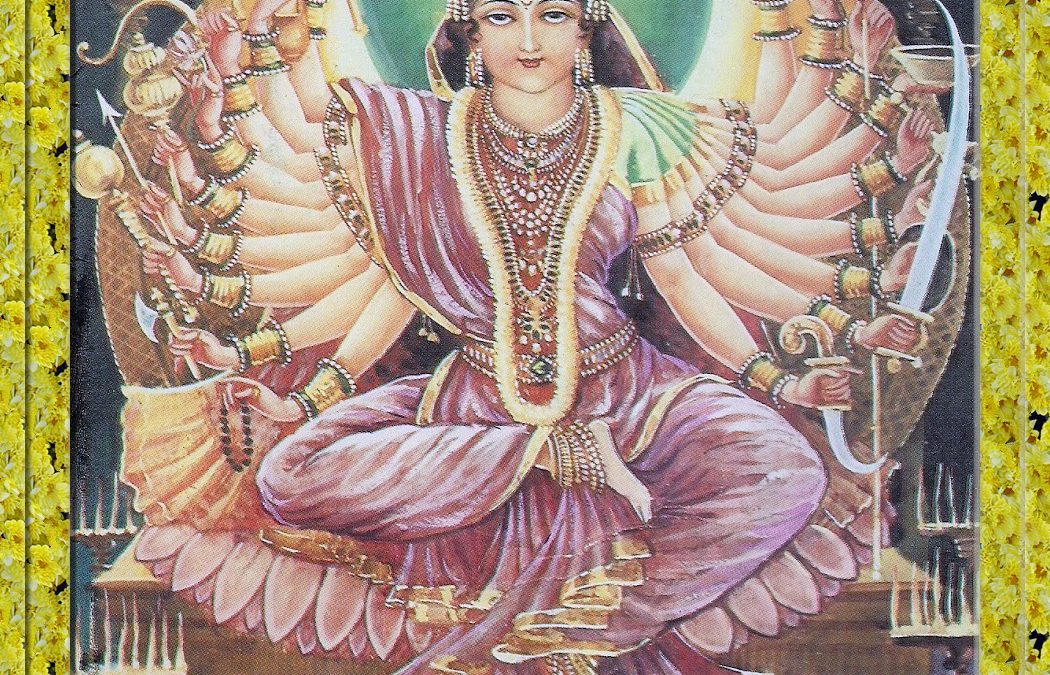
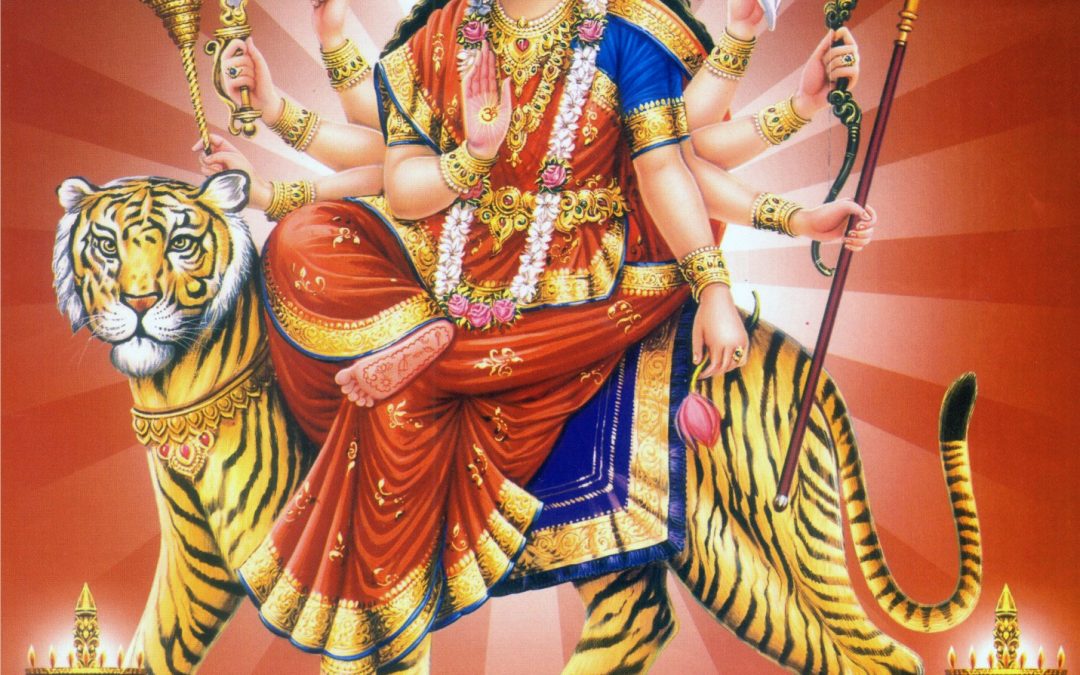
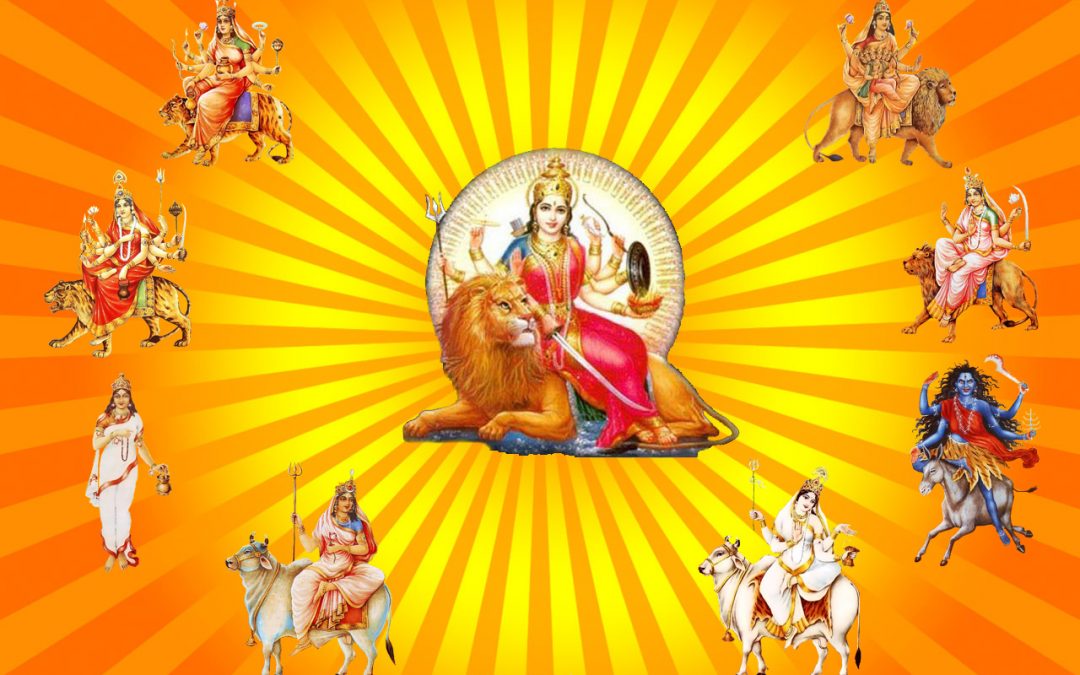
The longest Hindu festival that continues for nine consecutive nights following the day of the new moon in Ashwin, in praise of Lord Rama. Continuous chanting from the Ramayana, along with evening performances from the episodes of His life, is held for all nine days. The last four are associated also with the worship of Goddess Durga (Durga Puja), the female principle of energy of the universe, to celebrate the victory of good over evil. Rama is said to have worshipped the Goddess, seeking Her blessings in order to overpower the evil force of Ravana, the abductor of His beloved wife Sita.

DUSSERA / VIJAYA DASHAMI

The day following the end of the Navaratri festival marks the death of the demon Ravana at the hands of Rama. This is also the day of the parting of Goddess Durga from Her devotees. It is said that Rama had made a spacial worship of Goddess in order to be able to win the battle against the mighty Ravana with Her grace. In the eastern part of India, people embrace each other forgetting their differences, after having made their farewell to the Mother at the end of her yearly vist. They also treat one another with sweets.

DEEPAVALI OR DIWALI

Festival of loghts, celebrated on the night of the new moon following Dussera. Doiwali represent the prevalence of light in the midst of the darkness that life often encounters. Worship of Lakshmi, the Goddess of wealth and Prosperity, is carried out in the evening. Kali, the cosmic energy, is also worshipped. It is new year’s day in certain parts of india. Hindu believes that on this day Lord Rama came back to His Kingdom with wife Sita and brother Lakshman at the end of their long exile, and jubilant subjects celebrated the occasion by lighting the city of Ayodhya at night.

Posted in Hindu God, Hinduism | Tagged , , , , , , , , | Leave a comment