Monthly Archives: December 2011

Maa Phullara or Fullara, Attahasa Shakti Peeth – 11th Among 51 Shakti Peethas

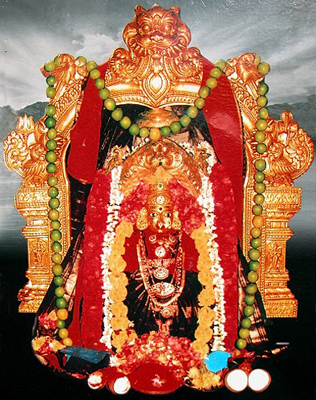
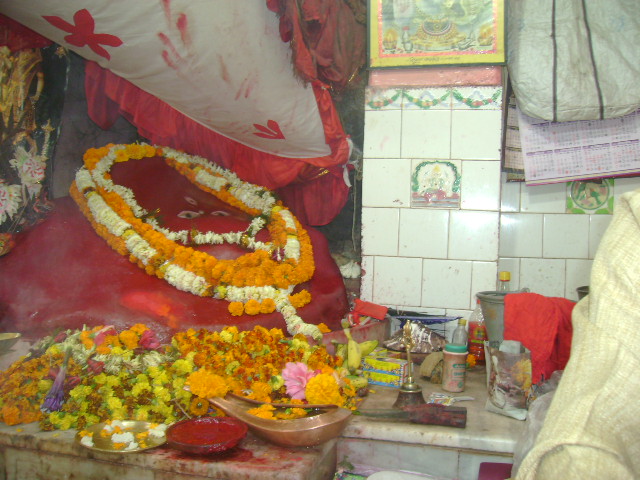
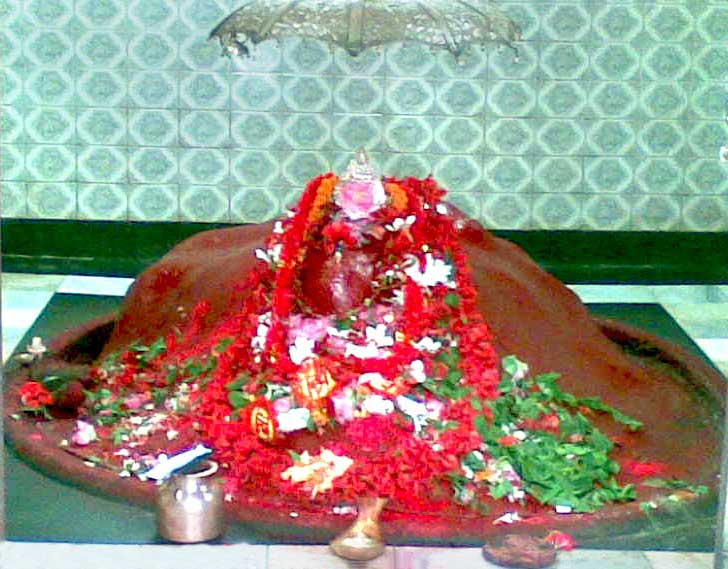
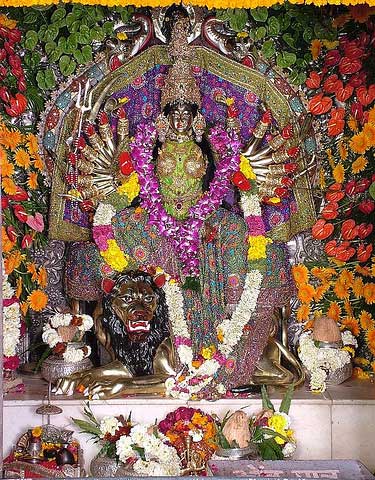
Attahas Shakti Peetha is the most famous Shakti Peetha where it is said that the “Lower Lip” of Maa Sati fell and the idols are Devi Maa as Phullara or Fullara (Blooming) and Lord Shiva as Vishwesh (Lord of the universe) Bhairav. It is located in Labhpur, W.B, India.

Maa Fullara

Maa Fullara

Attahas Fullara Shakti Peeth

Attahas Fullara Shakti Peeth

Attahas Shakti Peeth Temple

Attahas Shakti Peeth Temple

Image of Devi and the Shiva temple is next to the Devi temple. It is a major pilgrimage and tourist attraction. From Birbhum to Ahmedpur to Labhpur (6.5 miles). Attahas is just East of Labhpur, around 115 miles from Kolkata. The temple of Bhairav is beside the temple of Maa Fullora or Phullara. A deity made of stone. It is so large that the lower leap of the Goddess is about 15 to 18 feet wide.

Lord Shiva holding Maa Sati

Lord Shiva holding Maa Sati

According to mythology, when Mahadeva (Lord Shiva) danced around with Sati’s dead body cutting it to pieces, the lip fell at Fullara or Phullara. There is a big pond beside the temple. According to hearsay, Hanuman collected 108 blue lotuses from the pond when Sri Ramachandra required them for the worship of Goddess Durga.

Jai Mata Ki

Jai Mata Ki

Posted in 51 Shakti Peethas, Durga, Hinduism, Maa | Tagged , , , , , , , , , , , | 1 Comment

Maa Avantika, Bhairav Parvat Shakti Peeth – 10th Among 51 Shakti Peethas

Bhairav Parvat, Ujjain is the most famous Shakti Peetha where it is said that the “Upper Lip” of Maa Sati fell and the idols are Devi Maa as Avanti and Lord Shiva as Lambkarna Bhairav. It is located near Ujjain in Madhya Pradesh, India. Bhairavparvat, at Bhairav hills on the banks of Shipra river a little distance from Ujjaini town.

Jai Maa Avantika

Jai Maa Avantika

Maa Jagadamba

Maa Jagadamba

Ujjain also known as Ujain, Ujjayini, Avanti, Avantikapuri is an ancient city of Malwa region in central India, on the eastern bank of the Shipra or Kshipra River, today part of the state of Madhya Pradesh. It is the administrative centre of Ujjain District and Ujjain Division.

Mahakaleshwar Jyotirlinga Ujjain

Mahakaleshwar Jyotirlinga Ujjain

In ancient times the city was called Ujjayini. As mentioned in the Mahabharata epic, Ujjayini was the capital of the Avanti Kingdom, and has been the Prime Meridian for Hindu geographers since the 4th century BCE. Ujjain is one of the seven sacred cities “Sapta Puri” of the Hindus, and the Kumbh Mela religious festival is held there every 12 years. It is also home to Mahakaleshwar Jyotirlinga, one of the twelve Jyotirlinga Shrines to the Lord Shiva and is also the place where Lord Krishna got education with Balarama and Sudama from Maharshi Sandipani.

Shri Krishna, Balram & Rishi Sandipani

Shri Krishna, Balram & Rishi Sandipani

Posted in 51 Shakti Peethas, Hinduism, Krishna, Lord Shiva, Maa | Tagged , , , , , , , , , | Leave a comment

Maa Jwala Devi Jwalamukhi Shakti Peeth – 9th Among 51 Shakti Peethas

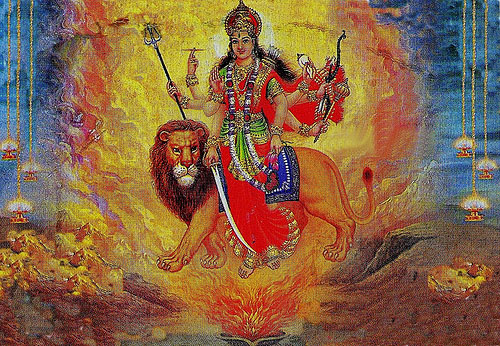
Maa Jwala Devi, Jwala Ji, Jwalamukhi is the most famous Shakti Peetha where it is said that the “Tongue” of Maa Sati fell and the idols are Devi Maa as Siddhida (Ambika) and Lord Shiva as Unmatta Bhairav. This is located in Disst. Kangra of Himanchal Pradesh. Jwalamukhi is famous temple, 30km south of Kangra valley of the Goddess Jwalamukhi with flaming mouth also known as Flaming Goddess.

Maa Shakti as Maa Jwala Ji

Maa Shakti as Maa Jwala Ji

Jai Maa Jwala Devi

Jai Maa Jwala Devi

These flames are worshiped as the manifestations of the diffrent forms of Goddess Jwala Maa. The nine flames have been named after Goddesses – Maha Kali, Maa Annapurna, Maa Chandi, Maa Hinglaj, Vindhyavasini, Maha Lakshmi, Maha Saraswati, Maa Ambika and Anjana Devi, continuously burning without any fuel or assistance, may be seen erupting from a rock-side. Now housed in the shape of nature is worshipped as a Goddess, know as Maa Jwala or Jawalamukhi. It is one of the 51 Shakti-Pitha temples. The great Mughal Emperor Akbar had visited this place to test its originality.

Anaapurna Maa

Anaapurna Maa

Maa Ambika

Maa Ambika

Maa Anjana

Maa Anjana

Maa Chandi

Maa Chandi

Maa Hinglaaj

Maa Hinglaaj

Maa Vindhyavasini

Maa Vindhyavasini

Mahakali Maa

Mahakali Maa

Maha Lakshmi Sraswati Maa

Maha Lakshmi Sraswati Maa

The temple belongs to the golden period when the gods roamed the Earth. Ancient legend speaks if a time when demons lorded over the Himalaya Mountains and harassed the Gods. Led by Lord Vishnu, the Gods decided to destroy them, they focused their strengths a huge flames rose from the ground. From that fire, a young girl tooks birth. She is regarded as Adishakti the first ‘Shakti’ known as Sati or Parvati, she grew up the house of Prajapati Daksha and later became the consort of Lord Shiva.

Jai Maa Jwala Mandir

Jai Maa Jwala Mandir

Jwala Maa Mandir

Jwala Maa Mandir

Jwala Maa

Jwala Maa

Maa Jwala Mandir

Maa Jwala Mandir

Once her father insulted Lord Shiva and unable to accept this, she killed herself. When Lord Shiva heard of his wife’s death his range knew no bounds and holding Sati’s body he began stalking the three worlds. The other gods trembled before his wrath and appealed to Lord Vishnu for help. Lord Vishnu let fly a volley of arrows which struck Sati’s body and severed it to pieces. At the Places where the pieces fell, the fifty-one sacred ‘shaktipeeths’ came into being. Sati’s tongue fell at Jwalaji and the Goddess is manifest as tiny flames that burn flawless blue through fissures in the age-old rock. Even the Pandavas are regarded to have visited this sacred place.

Jwala Maa Ka Seja Bhwan

Jwala Maa Ka Seja Bhwan

Maa Ji Sej

Maa Ji Sej

According to another legend, the Goddess appeared in a dream to a Brahmin in faraway South India, and directed him to proceed to the hills of Kangra in the shadow of the Dhauladhars and search for small tongues of flame leaping from the ground. The Brahmin, it is said responded discovered the sacred spot and in due course of time, erected a temple. Some people believe that Jwalamukhi represents the flaming mouth of Jalandhara, the demon whom Lord Shiva crushed to death by placing on him a huge mass of mountains.

Dhyanu Bhagat is well known devotee of Maa Durga. It is him who spread Devi Mata’s name. He lived at the time of the Mughal Emperor Akbar. Dhyanu Bhagat was going to Jwalaji with a group of pilgrims. Akbar summoned him to his court to inquire into the nature of their Goddess. Dhyanu Bhagat told him She is all powerful and answers the prayers of Her devotees.

Dhyanu Bhagat Maa Jwala

Dhyanu Bhagat Maa Jwala

To test Her power Akbar cut off the head of Dhyanu’s horse ordering him to have the Goddess put it back. Dhyanu went to Maa Jwalaji and prayed day and night to no avail. Out of desperation he cut of his own head and offered it to Devi Maa. She then appeared to him riding a lion. She reconnected both his head and that of the horse. Devi Maa also offered Dhyanu Bhagat a boon. He requested that it should not be so difficult for pigrams to show their devotion. Mata said that in the future if someone offered a coconut she would accept it as if they had offered their own head. To this day people continue to offer coconuts to the Goddess in Her temples all over the world. After the knowing that the head of horse is reconnected, Akbar the great Mughal Emperor visited the temple. The water course which today drips into a tank in the temple premises is said to have been constructed by Akbar in an attempt to douse the jets of flames in the temple.

The story goes that when the flames refused to be vanquished by the water channel specially constructed for the purpose, Akbar with utmost humility, became a devotee of the Goddess, and overcome by emotion, presented a chattra (umbrella) of gold to the Goddess. But when leaving, the Emperor looked back with immense pride at the valuable gift that he had made to the Goddess, and was mortified to find that the gold had turned into copper! Later Akbar’s son Jahangir invaded the Kangra valley and after seeing Jwalamukhi, wrote in his Tuzk (memories) near the temple and on the slope of the hill there is a sulphur mine and its heat causes flames to continually burst forth. They call it Jwalamukhi(flaming face or fiery mouth), and regard it as one of the idol’s miracles. Jahangir goes on to relate the legend of Shiva and Parvati and other stories connected with Jwalamukhi.

Maa Tara Devi

Maa Tara Devi Mandir Near Jwala Ji

Posted in 51 Shakti Peethas, Durga, Hinduism, Maa | Tagged , , , , , , , , , , , , , | 2 Comments

Maa Varahi Panchasagar Shakti Peeth – 8th Among 51 Shakti Peethas

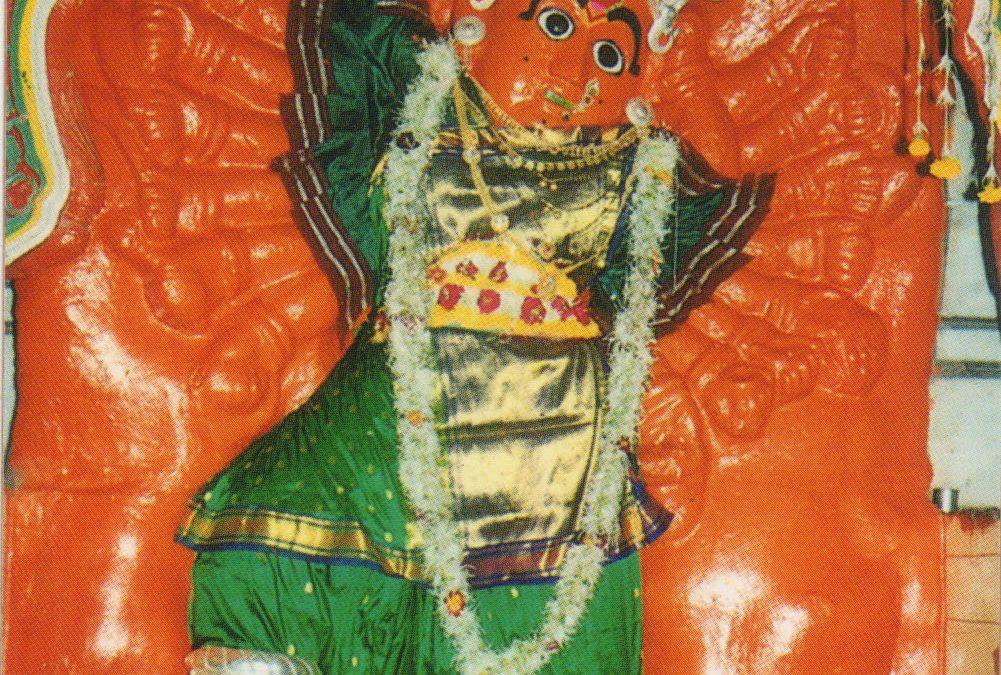
Panchasagar is the famous Shakti Peetha near Varanasi,Uttar Pradesh where it is said that the Lower Teeth of Maa Sati fell and the idols are Devi Maa as Varahi and Lord Shiva as Maharudra (The angry one).

Maa Vaarahi

Maa Vaarahi

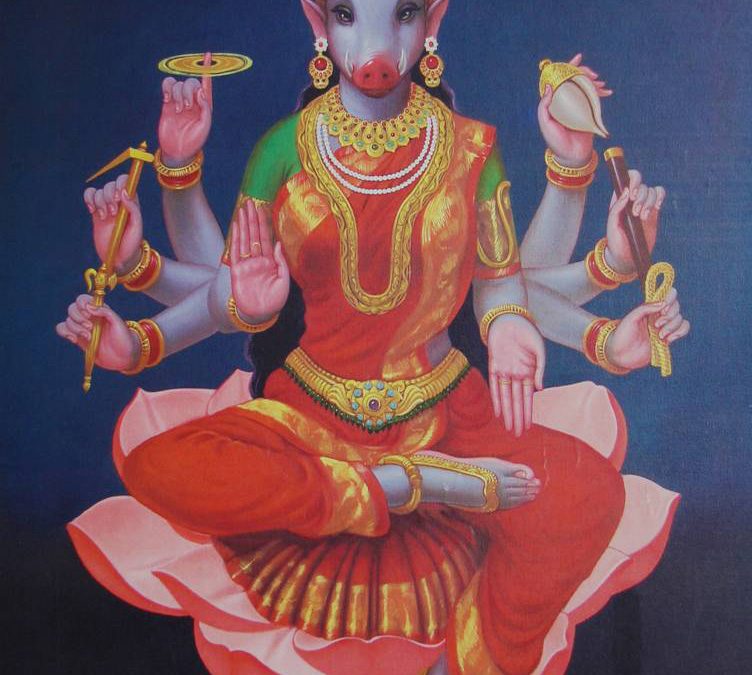
Varahi Maa is one of the Matrikas, a group of seven or eight mother goddesses in the Hindu religion. With the head of a sow, Varahi is the Shakti (feminine energy, or sometimes, consort) of Varaha, the boar Avatar of the Lord Vishnu. In Nepal, she is called Barahi.

Varahi Maa

Varahi Maa

Maa Varahi is worshiped by all the three major schools of Hinduism: Shaktism (Goddess worship), Shaivism (followers of God Shiva), and Vaishnavism (Devotion to Lord Vishnu). She is usually worshiped at night, and according to secretive Vamamarga Tantric practices. The Buddhist goddesses Vajravarahi and Marichi are believed to have their origins in the Hindu goddess Varahi.

Maa Varahi

Maa Varahi

It well described in Devi Mahatmya in context of the Shumbha-Nishumbha Vadh from the Markandeya Purana religious texts, the Matrikas Goddesses appear as shaktis from the bodies of the Gods. The scriptures say that Varahi was created from Varaha. She has a boar form, wields a chakra (discus), and fights with a sword. After the battle described in the Purana, the Matrikas danced & drunk on their victim’s blood.

Lord Varaha

Lord Varaha

According to a latter episode of the Devi Mahatmya that deals with the killing of the demon Raktabija, the Mother Goddess Durga creates the Matrikas from herself and with their help slaughters the demon army. When the demon Shumbha challenges Durga to single combat, she absorbs the Matrikas into herself. In the Vamana Purana, the Matrikas arise from different parts of the Divine Mother Chandika, Varahi arises from Chandika’s back.

Varaha Avatharam

Varaha Avatharam

The Markendeya Purana praises Varahi as a granter of boons and the regent of the northern direction, in a hymn where the Matrikas are declared as the protectors of the directions. In another instance in the same Purana, she is described as riding a buffalo. The Devi Bhagavata Purana says Maa Varahi, with the other Matrikas, is created by the Supreme Mother. The Mother promises the gods that the Matrikas will fight demons when needed. In the Raktabija episode, Varahi is described as having a boar form, fighting demons with her tusks while seated on a preta (corpse).

Lord Vishnu as Varaha Avatar

Lord Vishnu as Varaha Avatar

In the Varaha Purana, the story of Raktabija is retold, but here each of Matrikas appears from the body of another Matrika. Varahi appears seated on Shesha-Naga (the serpent on which the god Vishnu sleeps) from the posterior of Vaishnavi, the Shakti of Lord Vishnu. Varahi is said to represent the vice of envy (asuya) in the same Purana.

The Matsya Purana tells a different story of the origin of Varahi. Varahi, with other Matrikas, is created by Shiva to help him kill the demon Andhakasura, who has the ability like Raktabija to regenerate from his dripping blood.

Posted in 51 Shakti Peethas, Durga, Hinduism, Maa | Tagged , , , , , , , , , , , , | Leave a comment

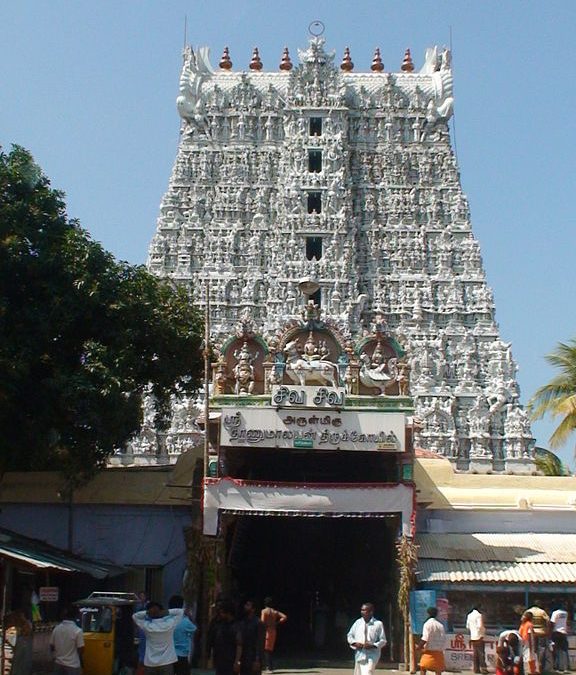
Maa Narayani Suchindram Shakti Peeth near Kanyakumari – 7th Among 51 Shakti Peethas

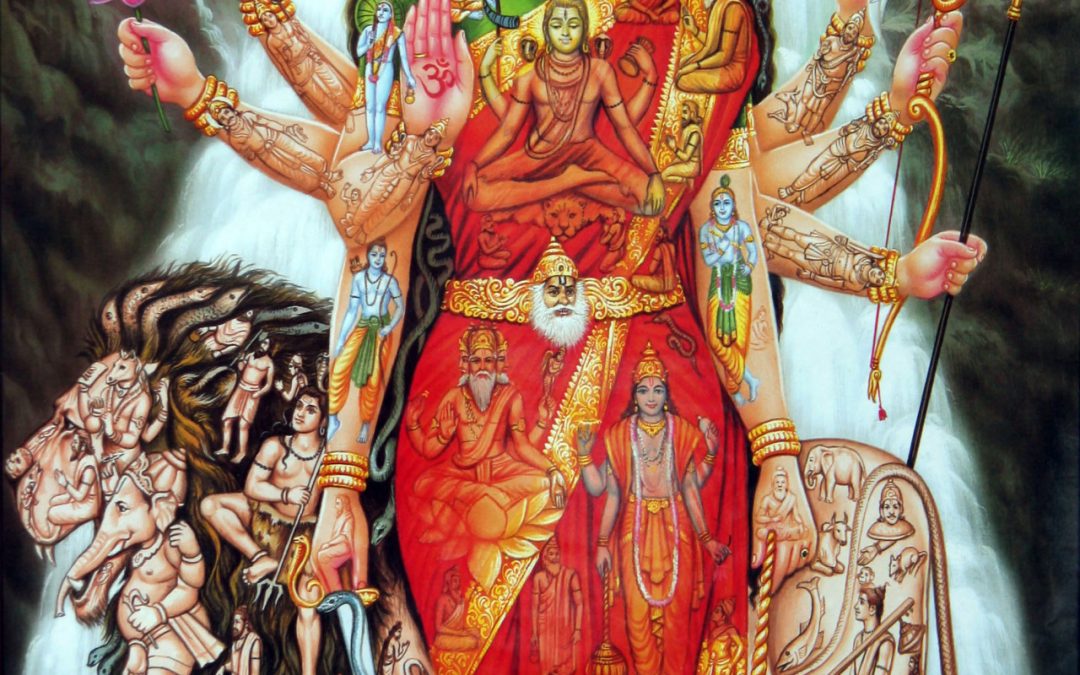
Suchindram (Suchindrum) is the famous Shakti Peetha where it is said that the Upper Teeth of Maa Sati fell and the idols are Devi Maa as Narayani and Lord Shiva as Sanghar or Samhara Bhairava. Some times the goddess is popularly known as Kanya Kumari or Bhagavathy Amman, and looks extremely beautiful after early morning Puja. Samhara Bhairava is present in a nearby village, Suchindram, he is locally called Sthanu Shiva.

Narayani - Vaishnavi Shakti of Lord Vishnu

Narayani - Vaishnavi Shakti of Lord Vishnu

Suchindrum is a temple town situated in the southern most district of Kanyakumari in Tamil Nadu State, India. It is 11 km from Kanyakumari city and about 7 km from Nagarkoil lying between these two towns. The temple is dedicated to Sri Sthanumalayan. The word denotes Siva, Vishnu and Brahma as. Sthanu represents Siva, Mal represents Vishnu while Ayan represents Brahma, means Siva, Vishnu and Brahma in “One Form”.

Suchindrum Temple

Suchindrum Temple

Suchindrum means the place where Indra attained “Suchi” (Purification). The Sthalapurana has it that Indra suffered a curse from sage Gowthama, when he stealthily cast amorous glances at Ahalya the wife of Gowthama. Not able to suffer the mortification brought about by the curse. Indra had to seek immediate redemption. He came to ‘Gnana Aranya’ as this place was then called and offered worship to Lord Shiva. Relieving Indra of his curse, Lord Shiva granted him of his wish that the place where he attained purification should henceforth be called ‘Suchindrum’.

Sthanumalayan - Brahma Vishnu and Shiva

Sthanumalayan - Brahma Vishnu and Shiva

Another story goes to say that the Trimurti’s- Brahma, Vishnu and Shiva, cajoled by their divine consorts came down to the earth to test the chastity of Anusuya, wife of sage Athri at Gnana Aranya. The Gods for this misadventure had to suffer a surse form the Rishipatni and to undergo the purification process, before they could be restored to their former glory.

Lord Brahma, Lord Vishnu, Lord Shiva

Lord Brahma, Lord Vishnu, Lord Shiva


The Hindu Trinity - Brahma, Vishnu, Shiva

The Hindu Trinity - Brahma, Vishnu, Shiva


Lord Brahma, Lord Vishnu and Lord Shiva

Lord Brahma, Lord Vishnu and Lord Shiva

It is said that Thanumalaya Swamy temple is the only shrine dedicated to the Trinity in India. The present structure of the temple is the work of a number of persons spread over a number of centuries. It is a complex of many beautiful structures constructed at various times and is one of the best specimens and a store house of the Dravidian style of art and architecture.

Posted in 51 Shakti Peethas, Durga, Hinduism, Lord Brahma, Lord Shiva, Lord Vishnu, Maa | Tagged , , , , , , , , , | Leave a comment