Monthly Archives: September 2010

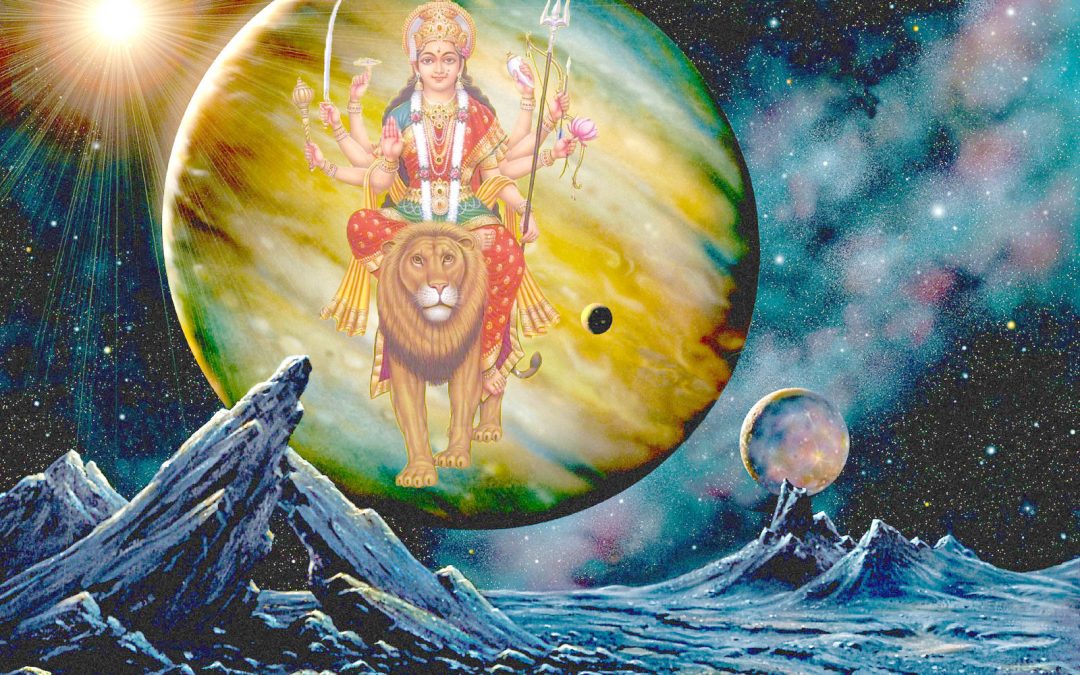
Navratri 2010, Navratri Festival or Durga Pooja

Navratri is one of the most important festivals in India. It is celebrated twice in a year. It is celebrated in the month of april and october in every year. There are many legends attached to the conception of Navratri like all Indian festivals. Navratri is a festival of Raas, Dandia, Garba and lots of fun! The Dandiya sticks making noise, people performing Garba and Raas and offering their prayers to Maa Durga. The festival is highly spirited and is celebrated across the country in various sections of the society with true devotion. People observe fasts on all nine days.

Jai Maa Durga

Jai Maa Durga

In the North Dusshera, or the day after Navratri, is celebrated with gusto and enthusiasm. The day after Navratri is Dusshera and it is believed that it was on this day that Lord Rama had killed Ravana. So on this day people burn the effigies of Ravana and celebrate the victory of good over evil. Each region celebrates the festival in its own way but the unique thing about the festival is that it unites people and takes them a level above the caste, creed and color, region and religion differences.

Durga Chalisa:

|| नमो नमो दुर्गे सुख करनी Namo Namo Durge Sukh karani
नमो नमो अम्बे दुःख हरनी Namo Namo ambe Dukh harani ||

|| निराकार है ज्योति तुम्हारी Nirakar hai jyoti tumhari
तिहूँ लोक फैली उजयारी Tihun lok pheli ujayari ||

|| शशि ललाट मुख महाविशाला Shashi lalat mukh mahavishala
नेत्र लाल भृकुटी विकराला Netra lal bhrikutee vikarala ||

|| रूप मातु को अधिक सुहावे Roop Matu ko adhika suhave
दरस करत जन अति सुख पावे Daras karat jan ati sukh pave ||

|| तुम संसार शक्ति लाया किना Tum sansar shakti laya kina
पालन हेतु अन्ना धान दिना Paalan hetu anna dhan dina ||

|| अन्नपूर्ण हुई जग पाला Annapurna hui jag pala
तुम्ही आदी सुंदरी बाला Tumhi adi sundari Bala ||

|| प्रलय काला सब नाशन हरी Pralaya kala sab nashan hari
तुम गौरी शिव शंकर प्यारी Tum gauri Shiv-Shankar pyari ||

|| शिव योगी तुम्हरे गुना गावें Shiv yogi tumhre guna gaven
ब्रह्म विष्णु तुम्हें नित ध्यावें Brahma Vishnu tumhen nit dhyaven ||

|| रूप सरस्वती को तुम धारा Roop Saraswati ko tum dhara
दे सुबुद्धि ऋषि मुनिना उबारा De subuddhi rishi munina ubara ||

|| धर्यो रूप नरसिम्हा को अम्बा Dharyo roop Narsimha ko amba
प्रगत भयं फार कर खम्बा Pragat bhayin phar kar khamba ||

|| रक्षा करी प्रहलाद बचायो Raksha kari Prahlaad bachayo
हिरनाकुश को स्वर्ग पठायो Hiranakush ko swarga pathayo ||

|| लक्ष्मी रूप धरो जग महीन Lakshmi roop dharo jag mahin
श्री नारायण अंगा समिहहीं Shree Narayan anga samihahin ||

|| क्षीर सिन्धु में करत विलासा Ksheer sindhu men karat vilasa
दया सिन्धु दीजे मन असा Daya Sindhu, deeje man asa ||

|| हिंगलाज में तुम्हीं भवानी Hingalaja men tumhin Bhavani
महिमा अमिट न जेट बखानी Mahima amit na jet bakhani ||

|| मातंगी धूमावती माता Matangi Dhoomavati Mata
भुवनेश्वरी बागला सुखदाता Bhuvneshwari bagala sukhdata ||

|| श्री भैरव लारा जोग तरनी Shree Bhairav lara jog tarani
छिनना भला भावः दुःख निवारानी Chhinna Bhala bhav dukh nivarani ||

|| केहरी वहां सोह भवानी Kehari Vahan soh Bhavani
लंगूर वीर चालत अगवानी Langur Veer Chalat agavani ||

|| कर में खप्पर खडग विराजे Kar men khappar khadag viraje
जाको देख कल दान भजे Jako dekh kal dan bhaje ||

|| सोहे अस्त्र और त्रिशूला Sohe astra aur trishoola
जसे उठता शत्रु हिय शूला Jase uthata shatru hiya shoola ||

|| नगरकोट में तुम्ही विराजत Nagarkot men tumhi virajat
तिहूँ लोक में डंका बाजत Tihun lok men danka bajat ||

|| शुम्भु निशुम्भु दनुज तुम मारे Shumbhu Nishumbhu Danuja tum mare
रक्त-बीजा शंखन संहारे Rakta-beeja shankhan samhare ||

|| महिषासुर नृप अति अभिमानी Mahishasur nripa ati abhimani
जेहि अघा भर माहि अकुलानी Jehi agha bhar mahi akulani ||

|| रूप कराल कलिका धारा Roop karal Kalika dhara
सेन सहित तुम तिन संहार Sen Sahita tum tin samhara ||

|| पण गर्हा संतान पर जब जब Pan garha Santan par jab jab
भाई सहाय मातु तुम तब तब Bhayi sahaya Matu tum tab tab ||

|| अमर्पुनी अरु बसवा लोक Amarpuni aru basava loka
तवा महिरना सब रहें असोका Tava Mahirna sab rahen asoka ||

|| ज्वाला में है ज्योति तुम्हारी Jwala men hai jyoti tumhari
तुम्हें सदा पूजें नर नारी Tumhen sada poojen nar nari ||

|| प्रेम भक्ति से जो यश गावे Prem bhakti se Jo yash gave,
दुःख-दरिद्र निकट नहीं आवे Dukh-daridra nikat nahin ave ||

|| ध्यावे तुम्हें जो नर मन ली Dhyave tumhen jo nar man laee
जनम-मरण ताको छुटी जाई Janam-maran tako chuti jaee ||

|| जोगी सुर मुनि कहत पुकारी Jogi sur-muni kahat pukari
जोग न हो बिन शक्ति तुम्हारी Jog na ho bin shakti tumhari ||

|| शंकर आचारज टाप कीन्हों Shankar Aacharaj tap keenhon
काम क्रोध जीत सब लीन्हों Kam krodha jeet sab leenhon ||

|| निसिदिन ध्यान धरो शंकर को Nisidin dhyan dharo Shankar ko
कहू कल नहिनी सुमिरो तुम को Kahu kal nahini sumiro tum ko ||

|| शक्ति रूप को मरण न पायो Shakti roop ko maran na payo
शक्ति गयी तब मन पछितायो Shakti gayi tab man pachitayo ||

|| शरणागत हुई कीर्ति बखानी Sharnagat hui keerti bakhani
जय जय जय जगदम्ब भवानी Jai jai jai Jagdamb Bhavani ||

|| भाई प्रसन्ना आदि जगदम्बा Bhayi prasanna Aadi Jagdamba
दाई शक्ति नहीं कीं विलम्बा Dayi shakti nahin keen vilamba ||

|| मोकों मातु कष्ट अति घेरो Mokon Matu kashta ati ghero
तुम बिन कौन हरे दुःख मेरो Tum bin kaun hare dukh mero ||

|| आशा तृष्णा निपट सातवें Aasha trishna nipat sataven
मोह मदादिक सब बिन्सवें Moh madadik sab binsaven ||

|| शत्रु नाश कीजे महारानी Shatru nash keeje Maharani
सुमिरों एकचित तुम्हें भवानी Sumiron ekachita tumhen Bhavani ||

|| करो कृपा हे मातु दयाला Karo kripa Hey Matu dayala
रिद्धि सिद्धि दे करहु निहाला Riddhi-Siddhi de karahu nihala ||

|| जब लगी जियूं दया फल पाऊँ Jab lagi jiyoon daya phal paoon
तुम्हरो यश में सदा सुनाऊँ Tumhro yash men sada sunaoon ||

|| दुर्गा चालीसा जो गावे Durga Chalisa jo gave
सब सुख भोग परमपद पावे Sab sukh bhog parampad pave ||

Posted in Durga, Maa, Navdurga | Tagged , , , , , | Leave a comment

Lord Brahma – The God of Creation

Brahma was born of the golden egg, Hiranyagarbha. When the egg divided into two parts, heaven and earth were formed. Between these was the sky. He is also said to have sprung from Vishnu’s navel, on a lotus, symbolizing rebirth from deeds of past manifestations. A day of Brahma, or Kalpa, is equivalent to 4320 million years.

Hindu God Brahma

Lord Brahma

Brahma is personified by four heads (for four directions) and four arms. He carries a sceptre to bow and like all gods, has a vehicle, the swan. His perch is on Mount Meru and is called Brahmapura or Brahmaloka – the place of Brahma.

He is the lord of scholarship and the four Vedas came from his mouth. His consort is Saraswati, the goddess of higher learning and the arts. Both are thus connected with the art of sculpture, architecture, painting, writing, drama, dance and music, and are worshipped by those seeking spiritual and intellectual advancement.

From Brahma’s body came the four castes of the Hindus: The Brahmans or priests from his mout,; the Kshatriyas or soldiers from his arms; the Vaishyas or traders from his thigh and the Sudras or menial workers from his feet.

Today the most important temple of Brahma stands in Pushkar, Rajasthan.

Posted in Hindu God, Hinduism | Tagged , , | Leave a comment

Lord Shiva Hindu God of Destruction

Lord Shiva in Hindu is regarded as God of Destruction. The word ‘Shiva’ means propitious. The deity is depicted bot as a static as well as a dynamic principle. In the Shiva-Shakti context, he is the principle of changeless and a supreme state of peace and joy, attainment of which is the goal of human life, as we have already seen. In the dynamic aspect, He is the creator, preserver and destroyer of the universe.

Goddess Parvati & Lord Shiva

Goddess Parvati & Lord Shiva

Shiva as Natraj

The Nataraja (King of dances) posture depicts the moment of his dynamically. Here, the creator aspect is signified by the drum in the upper right hand, standing for the primordial sound. The preserver aspect is indicated by the posture of benevolence and fear not, of the lower right hand., standing for the granted consequent on the kindling of the fire of wisdom in the aspirant’s heart, the fire that is held in his upper left hand. The fire is lighted with one’s total surrender at the feet of the Lord as suggested by the lower left hand pointed to the feet. The dance itself and the fire encircling the image stand for thee destruction of evil propensities once we open ourselves up to him, for in destruction lie the seeds of regeneration toward the state of divinity. At he base of the image evil personified is shown as equilibrium that the primordial elements – sattva, rajah and their base. The crescent moon on his forehead signifies the gradual awakening of divine consciousness in us. The snake means the awakening of the divine energy, as has already been indicated. The vehicle of Shiva is the bull which stands for our animal nature that has bee brought under his total control.

Lord Shiva as Shiva Linga

The most abstract depiction of Shiva is in the form of a linga which stands for the principle of absolute changeless around which all changes occur. He is the culmination of all our activities, right or wrong, which have a natural direction toward him.

Posted in Hindu God, Hinduism, Lord Shiva | Tagged , , , , | Leave a comment

Ganesh Chaturthi, Birthday of Lord Ganesha, Ganesh Festival of Maharashtra

The birthday of Lord Ganesh is celebrated on the 4th day of the bright half of Bhadrapad Shukla (August/September). This festival is celebrated for 10 days from Ganesh Chaturthi to Anant Chaturdashi (the final 10th day of his immersion). Everyone loves this deity with his curving trunk, potbelly and big flat ears. He is the benevolent protector of the innocent, yet the ruthless destroyer of evil. His mount is a rat.

Lord Ganesha Birthday Festival of Maharashtra

Ganesh Chaturthi, Birthday of Lord Ganesha, Ganesh Festival of Maharashtra

In several states of India, but especially in Maharashtra clay idols of Ganesh in varying sizes are made and sold. The idols are purchased and brought home the day previous to Ganesh Chaturthi, which is the day of Hartalik when women keep fast and invoke the blessings of goddess Parvati, who is Ganesh’s mother.

In several states of India, but especially in Maharashtra clay idols of Ganesh in varying sizes are made and sold. The idols are purchased and brought home the day previous to Ganesh Chaturthi, which is the day of Hartalik when women keep fast and invoke the blessings of goddess Parvati, who is Ganesh’s mother.

In streets and commercial establishments community worship is offered to a life-size or even a bigger image, installed on an erected platform. This Lord Ganesh is very fond of sweets and hence khir, panchamrit, fruits and sweets and specially modaks are placed before him as “Naivedya” or “Bhog”. After the ritual worship this “Bhog” is distributed as “Prasad”.

On the day of immersion, which is either on 3rd, 5th, 7th or 10th day after performing of “Puja”, the idol is taken out in a procession by people who dance and sing. On the 10th day – the Anant Chaturdashi day the sea fronts are packed with surging mass of humanity as the idols of Ganesh are carried towards their watery rest among shouts of:-

“Ganapati Bappa Moriya, Pudhachya varshi lavkar ya”
(Return early next year, Oh Victorious Lord Ganesh).

Many interesting legends about the birth and the greatness of Lord Ganesh are found in old ancient religious texts. He is considered to be the god of wisdom, prudence and prosperity. The worship of this god is coming down to us right from the Vedic times. Every religious ceremony is completed even today with invoking his blessings at the very beginning with the solemn recitation of “Om Ganeshaya Namaha” (I bow to Thee Lord Ganesh). It is believed that Lord Ganesh put down on paper the slokas of our great epic Mahabharat as Maharshi Ved Vyas dictated them to him. Sant Gyaneshwar’s Gyaneshwari starts with praise of Lord Ganesh.

Since the days of Chatrapati Shivaji Maharaj the founder of the Maratha Empire this Ganesh Festival was celebrated on a grand scale in Pune and later on the Peshwas themselves participated in this festival, as Ganesh was their family deity. Today this festival is the most colourful and happy event in the religious, social and cultural life of India specially that of Pune. With the end of the Peshwa regime this festival lost its glamour and came to be observed privately in households only. Thus many years passed.

Lokmanya Bal Gangadhar Tilak, the Father of Indian Unrest, mobilised people through public Ganesh Utsav which was until then confined to the homes of the people and palaces of Maharajas. Hindus came together for the festival which became a source of political awakening against the British regime.

At the crucial juncture of India’s history when the nation indeed was under the yoke of slavery of the British, Lokmanya Tilak, who proclaimed “Swarajya is my birth-right and I’ll have it” realising the importance of the massive popularity of this festival initiated its nationwide celebrations in 1893. Then it became a platform for political awakening and uprising among people to gain freedom from British imperialism. Ganesh Festival thus played a very important role in our Freedom Struggle.

Castes and creeds were forgotten as people organised the festivals with great enthusiasm. Mandals or organisations of people in every locality came into being to organise the annual event with fanfare. After Independence in 1947, these Mandals continued to celebrate the festival with vigour and devotion. Political overtones of pre-Independence era were replaced by activities for social good. Pune Mandals, some of them established way back in the last decade of the 19th century, continued to remain in the forefront in their social outlook. Mandals in Mumbai and other towns of Maharashtra have kept the spirit of festivity and sense of commitment to the society. They do organise daily events during the ten days of Ganesh Festival.

Posted in Ganesha, Hindu God, Hinduism | Tagged , , , , , , | Leave a comment

Ganesh Chaturthi, Birthday of Lord Ganesha – The God Wisdom and Prosperity

Ganesh Chaturthi is celebrated on the birthday of God Ganesha, the god of wisdom and prosperity on the fourth day of the moons bright fortnight, or period from new moon in the lunar month of Bhadrapada. The celebration of Ganesh Chaturthi continue for five, seven, or ten days. Some even stretch it to twenty one days, but ten the most popularly celebrated. In the tradition of the right hand path the first day is the most important. In the left hand path tradition the final day is most important.

Lord Ganesha Statues for Worship

Lord Ganesha Wearing Pagdi (Turban) Shree Ganesh Chaturthi Woship

Ganesha is the god of wisdom and prosperity and is invoked before the beginning of any auspicious work by the Hindus. It is believed that for the fulfillment of one’s desires, his blessing is absolutely necessary. According to the mythology, he is the son of Shiva and Parvati, brother of Kartikeya – the general of the gods, Lakshmi – the goddess of wealth and Saraswati-the goddess of learning. There are numerous stories in Hindu mythology, associated with the birth of this elephant-headed god, whose vehicle is the Mooshak or rat and who loves Modaks.

Lord Ganesha is worshiped with various names & forms as here mentioned in a Marathi prayer given below:-

Gananayaka Ganadaivataya Ganadaksha Yadhimahi
Guna shariraya Guna Manditaya Guneshanay Dhimahi
Gunaditaya Gunadhishaya Guna pravishtaya Dhimahai
Ekadantaya Vakratundaya Gauri tanahaya yadhi mahi
Gajeshanaya Bhalchandraya shree ganeshaya dhimahi
{Ekadantaya Vakratundaya Gauri tanahaya yadhi mahi
Gajeshanaya Bhalchandraya shree ganeshaya
dhimahi

Gaanachaturaya ganaapranaya gaanantaratmane gaanot
sukhay
Gaanamattaya gannott sukha mana se
Guru pujitaya, Guru daivataya, Guru kulasthaine
Guru Vikramaya, Guiyya pravaraya Gurave guna gura ve
Gurudaitya kalakchetre, Guru dharma sada rakdhyaya
Guru putra paritratre Guru pakhand khand khaya
Geet saraya, Geet tatvaya Geet kotraya dhimahi
Gudha gulfaya, Gandha Mattaya Gojaya pradaya dhimahi
Gunaditaya Gunadhishaya Guna pravishtaya Dhimahai
Ekadantaya Vakratundaya Gauri tanahaya yadhi mahi
Gajeshanaya Bhalchandraya shree ganeshaya dhimahi
{Ekadantaya Vakratundaya Gauri tanahaya yadhi mahi
Gajeshanaya Bhalchandraya shree ganeshaya
dhimahi ………………………….

Posted in Ganesha, Hindu God, Hinduism | Tagged , , , , , , , , | 1 Comment